

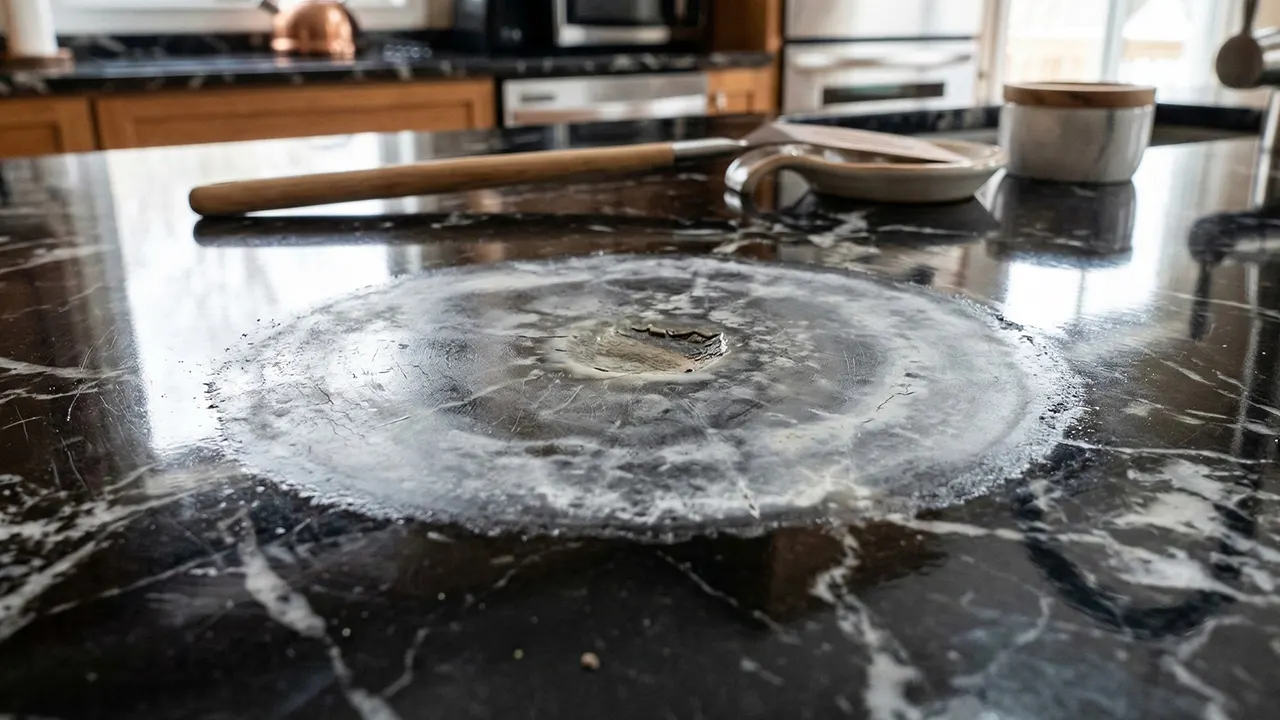
If there is one way to instantly ruin a brand-new, beautifully poured epoxy countertop, it's setting a hot cast-iron skillet directly on it. People hear the phrase "heat resistant" and assume it means "indestructible." Let's clear the air and talk about what your resin can actually handle in the real world.
In the shop, we don't say "heat proof"—we talk about Heat Deflection Temperature (HDT). This is the exact temperature point where fully cured epoxy stops acting like a rock-hard plastic and softens, becoming rubbery under pressure. It doesn't melt or catch fire; it yields. Push past the HDT, and your flawless surface is suddenly vulnerable to permanent dents, white cloudy rings, and delamination.
Heat Ratings vs. The Real World
Not all epoxies are built the same when it comes to thermal limits. If you want your project to survive everyday life, you have to match the resin to the conditions it will actually face. Here is a no-nonsense breakdown of what standard and ultra-high-temp epoxies can handle.
| Category / Item | Typical Temperature / HDT | What to Expect |
|---|---|---|
| Standard Epoxy | 120°F - 150°F HDT | Great for art, coasters, and occasional-use dining tables. |
| Ultra High-Temp Epoxy | 195°F HDT | The absolute go-to for kitchen countertops and high-use areas. |
| Hot Coffee Mug | 150°F - 175°F | Generally fine for quick rests, but use coasters on standard epoxy to be safe. |
| Boiling Water Spill | 212°F | High risk of softening standard epoxy. Wipe it up immediately! |
| Slow Cooker / Air Fryer | 200°F - 250°F (Base heat) | Danger: Sustained heat soaks right through over hours. Always use a trivet. |
| Frying Pan (Off the stove) | 350°F - 500°F | Extreme Danger: Will instantly ruin and brand the finish. Never do this. |
Time and Temperature: The Silent Killer
Heat resistance isn't just about how hot an object is; it's heavily dependent on how long it sits there. A freshly poured cup of hot coffee resting on your counter for five minutes usually won't leave a mark, even on standard epoxy.
But a slow cooker simmering at 200°F for six hours? That's a different story. The heat slowly bakes deep into the epoxy layer. Over time, that sustained, relentless thermal energy beats the HDT and softens the resin right down to the substrate, no matter how tough the initial rating looked on the bottle.

How to Actually Protect Your Epoxy Countertops
If you want your pours to look flawless years down the road, follow these shop rules. Keep in mind: no residential epoxy is completely fire-proof or safe for direct contact with screaming hot metal.
✔️ DO THIS:
- Use trivets or hot pads: Always put something between your fresh countertop and anything coming off a burner or out of the oven.
- Wait for a full chemical cure: Epoxy doesn't hit its peak HDT overnight. Give it time to fully cure—usually 7 to 21 days—before you put its heat resistance to the test.
- Wipe up hot spills fast: If boiling pasta water splashes over, grab a towel immediately so the heat doesn't soak in.
❌ DON'T DO THIS:
- Don't confuse "heat resistant" with "heat proof." Every epoxy has a breaking point.
- Don't park appliances directly on the surface: Air fryers, toaster ovens, and slow cookers blast heat straight down. Put them on a silicone mat or a raised cutting board.
- Don't drop hot pans on the counter: A pan straight from the stove hits 400°F+ fast and will permanently brand the surface.
- Don't grab a torch after it's cured: Torches are for popping bubbles during the wet pour—put them away once the resin sets.
Picking the Right Epoxy for the Job
Your choice of resin comes down to where it lives and what it has to handle. Don't overspend if you don't need to, but don't under-spec your kitchen!
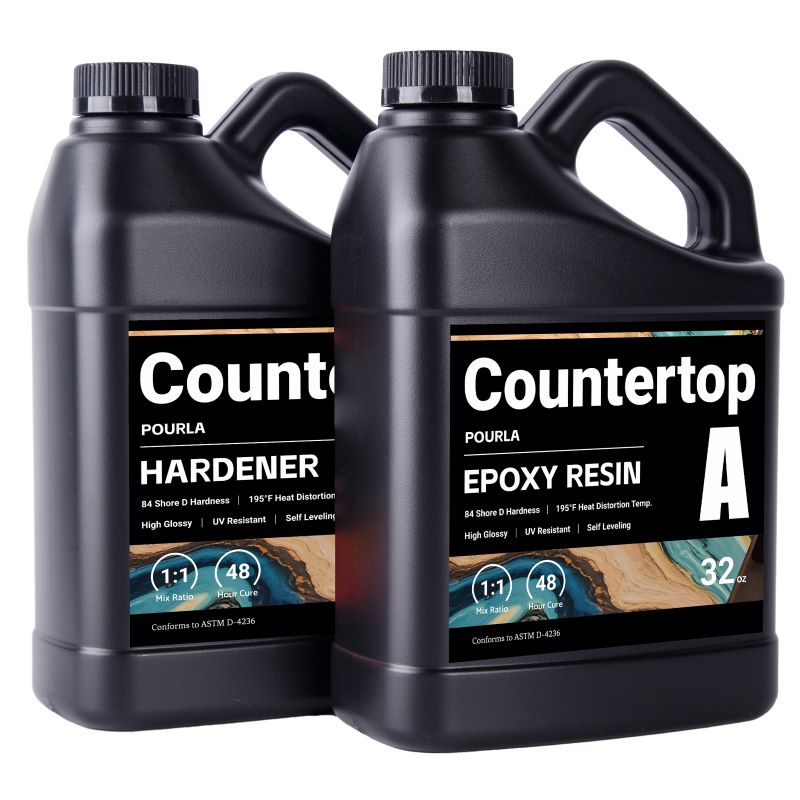
Countertop Epoxy
For general use, art, and beautiful finishes. Gives you great durability for normal room temps and the occasional warm plate.
View Countertop Epoxy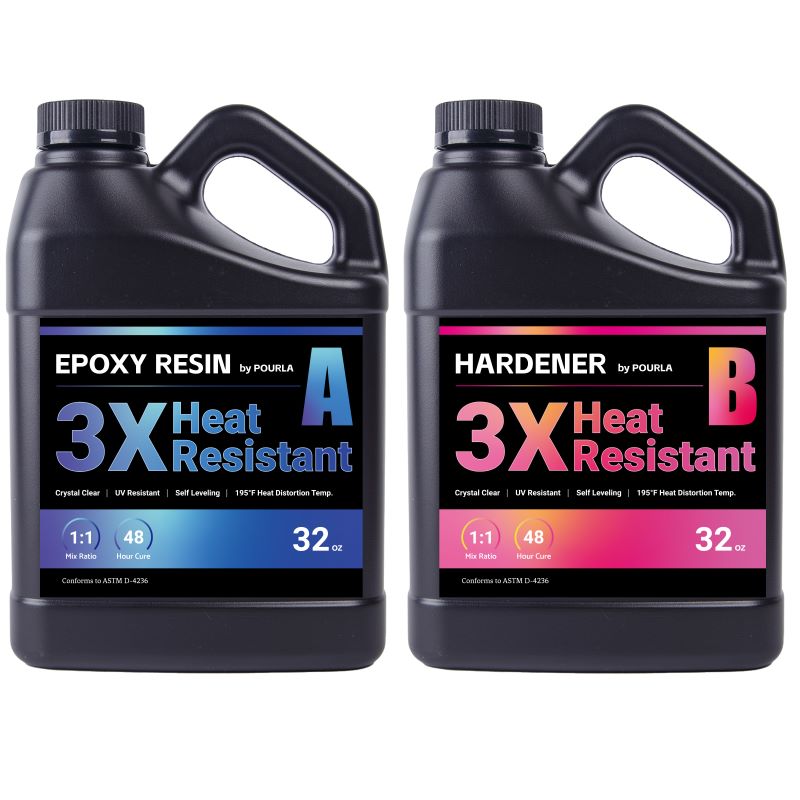
Ultra Heat Resistant Epoxy
For kitchens and daily abuse. Hits a massive 195°F+ HDT, giving you serious protection against everyday kitchen heat.
View Ultra EpoxyFrequently Asked Questions
Will epoxy melt if it gets too hot?
No, cured epoxy does not melt back into a liquid. When it exceeds its Heat Deflection Temperature (HDT), it softens, becomes rubbery, and can easily be dented or scratched. Extreme heat (like a flame) will cause it to scorch, burn, or delaminate from the surface.
How long until my epoxy countertop is fully heat resistant?
While an epoxy countertop may feel hard to the touch in 24-48 hours, the chemical cross-linking process takes much longer. To reach its maximum stated HDT and heat resistance, you should wait for a full cure, which typically takes 7 to 21 days depending on the temperature of the room.
Can I use an air fryer or slow cooker on my epoxy counters?
Yes, but you should never place them directly on the bare epoxy. These appliances vent sustained, intense heat directly downward. Always place a thick silicone mat, a wooden cutting board, or a trivet under heat-generating appliances to protect the resin below.
Pour Your Dream Kitchen
Ready to upgrade your countertops with a finish that looks like stone but costs a fraction of the price? Choose the right resin for the job.