

Last Update: March 25, 2026
Have you ever thought about what is resin, how resin is made, or where resin comes from?
Resin is a flexible substance that originates either from natural sources as a flowing liquid or from synthetic origins in a liquid form. Resin turns from liquid into a solid through a process called curing. During this process, the material hardens and becomes strong and durable. Because of their unique molecular structure, resins are widely used in art, manufacturing, and construction, making them great materials in many industries.
Uncured resin can look different depending on the type. Natural resins usually look like pale yellow to deep amber or brown. Synthetic resins, on the other hand, are typically clear liquids and only change color when pigments or dyes are added.
Once cured, resin forms a hard surface that is usually glossy and glass-like. The final appearance and performance of a resin project depend on three key factors:
- Selected resin type
- Any added colors
- Specific curing process.
In this article, we'll answer your query about what resin is. You will also know what the different types of resin are, how resin is made, and the potential applications of resin. So keep reading to learn everything about resin.
Resin is a polymer-based material that can cure from soft liquid to a durable plastic-like solid. Threre are two main types of resin: natural resin and synthetic resin. Natural resins come from plants, while synthetic resins are engineered by chemical reactions (like epoxy resin, polyaspartic, polyurethane, and UV resin). Resins are used for coatings, adhesives, composites, casting, art, and protective finishes.
- What is resin?
- What is resin made of?
- The Resin Manufacturing Process
- What are the Different Applications and Uses of Resin?
- Resin vs. epoxy resin
- How does resin harden?
- Resin safety basics
- Resin and Environmental Impact
- What are Resin Composites and Their Benefits?
- Frequently Asked Questions (FAQs)
Key Facts: Resin Types at a Glance
| Resin type | What it's made from | How it hardens | Common uses | Beginner-friendly? |
|---|---|---|---|---|
| Natural resin | Plant secretions (tree sap, fossilized forms like amber) | Often dries/oxidizes; can be processed into varnishes | Varnish, incense, perfumes, traditional materials | Sometimes |
| Epoxy resin (synthetic) | Two-part system (resin and hardener) | Chemical reaction after mixing | Coatings, casting, countertops, adhesives, composites | Yes |
| Polyester resin (synthetic) | Polyester and reactive diluent; catalyst-initiated | Catalyst-triggered cure | Fiberglass work, automotive, and marine repairs | Medium |
| Polyurethane resin (synthetic) | Isocyanate and polyol systems | Chemical reaction | Foams, coatings, flexible, and impact-resistant parts | Medium |
| UV resin (synthetic) | UV-curable oligomers and photoinitiators | Hardens under UV light | Small crafts, jewelry, quick topcoats | Yes |
Note: Specific performance (clarity, heat resistance, yellowing resistance, cure time) depends on the exact formulation and intended usages.
What is resin?
In plain language, resin is a material that starts workable (liquid or semi-solid) and becomes hard after it cures. After curing, most resins become a strong, durable solid. The finished surface can be crystal clear and glossy, colored and opaque with pigments, or enhanced with fillers to achieve specific performance features such as added strength, texture, or heat resistance.
Common properties of resin
- Moldability: It can be poured into molds and cure with disired shapes.
- Adhesion: It bonds well to wood, metal, and other surface.
- Durability: Once resin is fully cured, it transforms into a plastic-like solid that is typically very hard and durable.
- Chemical / water resistance: Many resin systems offer better resistance to moisture and chemicals compared to raw wood, helping protect surfaces from swelling, staining, and long-term damage
- Clarity: some resins cure crystal-clear for casting and coating.

What is resin made of?
You might be wondering about what is resin made of. Well, to understand the source of resin, you should know the types of resin first.
The classification of resins occurs between natural resins and synthetic resins. Plants provide the source for natural resins whereas synthetic resins originate from human manufacturing processes. The two categories of resins feature different characteristics which lead to separate industrial uses.
Natural Resins: Origin, Properties, and Uses
The production of natural resins starts from plant secretions which primarily originate from tree sources. The plant uses these resins both for defense against insects and to protect wounds by sealing them. Human beings have relied on these substances throughout many centuries for multiple uses.
Natural resin can be categorized into more types, such as:
- Hard Resin: Hard resins demonstrate both strong resistance to heat and absolute water non-solubility. These products find their applications in varnishes as well as adhesives.
- Gum Resin: Gum resins consist of combined materials which include resin along with gum. These materials are applied in the production of incense and perfumes together with their use in traditional medicinal practices.
- Oleoresins: This type of natural resin represents a mixture of essential oils combined with resin substances. Oleoresins serve as components for scents and taste additives.
Examples of Natural Resins:
- Copal: Used in perfumes and pharmaceuticals.
- Pine Resin/Rosin: Used in varnishes, adhesives, and inks.
- Dammar: Used in oil paints, varnishes, and cosmetics.
- Amber: Fossilized resin used in jewelry and decorative objects.
Synthetic Resins: Production, Properties, and Applications
While natural resin cannot meet the supply and demand gap, synthetic resin comes into action here. Laboratories produce synthetic resins which represent manufactured polymers of human creation.
These materials have a specific design purpose to copy or better the functional aspects of natural resins. Synthetic resins provide better design capabilities for product characteristics and they can be obtained more easily than natural resins.
Synthetic resin can be divided into two types based on their properties and curing nature:
- Thermosetting Resins: Thermosetting resins convert into a rigid structure that becomes permanent after curing through chemical changes. The chemical transformation blocks melting and shape alteration. Synthetic resins used in various products include epoxy for strong bonding and coatings and polyurethane for flexible foams. This resin is also used in polyester for fiberglass, vinyl ester for corrosion resistance and phenolic resins for molded heat-resistant products.
- Thermoplastic Resins: Thermoplastic resins are the type of resin that can be reshaped by melting. This resin can be reused as it can melt upon heating and form different shapes.
The common thermoplastic materials include:
- Acrylic (used for signs)
- Polycarbonate (used for eyewear)
- Alkyd (used for paints)
- Polyamide (used for fibers)
- Polyethylene (used for packaging)
- Polypropylene (used for automotive components)
- Polystyrene (used for insulation)
- Silicone (used for sealants)
The Resin Manufacturing Process
The production of finished resin products through raw materials requires different manufacturing processes for natural and synthetic resins. The process of resin creation reveals its initial sources and development through different manufacturing techniques. We'll look into both types of resins separately:
The Harvesting and Processing of Natural Resin
The extraction of natural resins occurs through plant secretions that mainly originate from trees. The process of resin harvesting starts when workers make cuts on tree bark to stimulate its resin output. The sticky resin substance goes through processing after collection.
The processing of natural resins involves two main steps:
- Filtering out bark and insects
- Heating the collected resin to lower water levels and make it more viscous
Different procedures apply to plant-based raw materials and their respective end products.
The Production of Synthetic Resins: A Step-by-Step Guide
Synthetic resin is manufactured in laboratories where scientists produce resin through precise chemical reactions.
- Laboratory-produced resins result from the combination of chemical compounds that contain both catalysts and monomers alongside the catalysts that trigger the polymerization reaction.
- Through polymerization, the monomers form long chains of polymers which become the fundamental structure of the resin.
- The production method for synthetic resins depends heavily on different chemical compounds and reaction protocols which determine the ultimate resin type.
- The resin goes through additional processing steps after polymerization for achieving its desired properties.

What are the Different Applications and Uses of Resin?
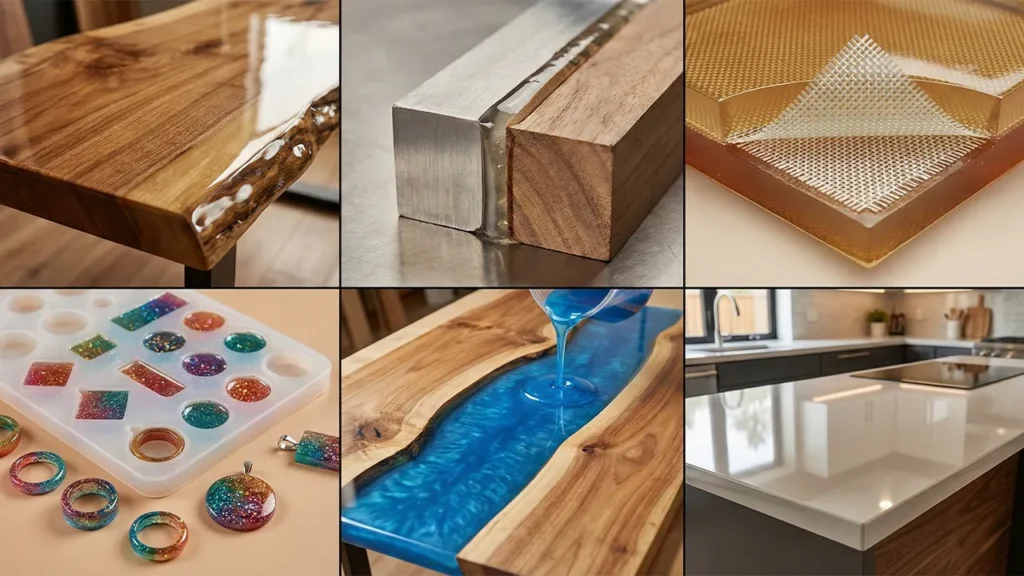
Resin has a versatile property portfolio that makes it ideal for various applications. The usage of resin is very vast; from industrial processes to artistic outcomes. The substance's capacity to transition from liquid to solid makes it applicable for innumerable uses including protective coatings and decorative items.
1) Coatings and protective finishes
- Sealing wood to resist moisture
- Creating a glossy, cleanable surface on countertops and furniture
- Protective coatings for concrete and industrial surfaces
2) Adhesives and bonding
Many resins act as high-performance adhesives—used in construction, manufacturing, repairs, and woodworking—because they can bond strongly to different materials.
3) Composites (fiberglass and carbon fiber)
Resin is the "matrix" that holds fiber sheets together. This is how industries achieve high strength-to-weight parts for:
- Boats and marine panels
- Automotive components
- Aerospace and sporting goods
4) Casting, crafts, and art
- Jewelry, keychains, molds, and embedded objects
- Decor items like coasters and trays
- Art pieces that rely on clarity, depth, and gloss
5) Specialty uses
- Dental materials and prosthetics (specialized resins)
- Electronics potting/encapsulation (specialized formulations)
Resin vs. Epoxy Resin: What's the Difference?
Resin is the broad umbrella term. Epoxy resin is one specific family of synthetic resins, typically supplied as a two-part system (Part A resin + Part B hardener). When mixed correctly, epoxy cures through a chemical reaction that forms a hard, durable solid.
If you're specifically working on coatings, casting, or countertop finishes, epoxy resin is often the category people mean. For more epoxy-specific guidance, start here:

How does resin harden?
"Curing" is the process that turns resin from workable to solid. There are a few common ways it happens:
- Two-part chemical cure: resin and hardener are mixed, triggering cross-linking (common for epoxy).
- Catalyst-initiated cure: a catalyst starts the reaction (common for some polyester systems).
- UV cure: UV light activates photoinitiators, hardening thin layers quickly (UV resin).
- Heat / cooling cycles: some systems harden by temperature change rather than chemical cross-linking (common in thermoplastics).
When working with two-part synthetic resins (like epoxy), you must strictly measure and mix the resin and hardener according to the exact specified ratio (e.g., 1:1 or 2:1 by volume). Eyeballing the measurements or adding "extra hardener" will absolutely not make it cure faster—it will break the chemical reaction entirely, leaving you with a permanently sticky, uncured mess.
What affects cure quality?
- Mixing quality: incomplete mixing can leave soft or sticky areas.
- Temperature: cold environments can slow or disrupt curing.
- Humidity/moisture: can affect certain resin systems and surface appearance.
- Pour thickness: thicker masses can behave differently than thin coats.
If you're troubleshooting epoxy that didn't cure as expected, these two resources are useful:
Resin Safety Basics
If you're working with resin, you should make sure that you're following all safety instructions. Working with resin calls for full attention toward safety practices. Even though some resins are produced with reduced toxicity levels, you need to implement protective measures during both work and workspace operations.
Handling
Putting on gloves should be your first step before working with resin and hardener because skin exposure leads to irritation and potential allergic reactions. You should prevent resin from touching your clothes and immediately switch to different clothing when contamination happens. Wash the affected skin area with soap and water after resin makes contact. Using solvents to remove resin from your skin should be avoided because it will enhance the absorption rate.
Ventilation
A well-ventilated workspace should be used to reduce exposure to fumes which may appear while mixing and curing occurs. When working with big resin amounts or limited spaces, use respirators made for organic vapor protection. The use of ventilation systems becomes crucial for work environments that involve resins containing volatile organic compounds (VOCs).
Protective Measures
The combination of gloves and ventilation should be accompanied by eye protection measures. Safety glasses with goggles protect your eyes from getting exposed to resin splash. If you need immediate medical assistance in case resin enters your eyes, then water rinse your eyes for multiple minutes. You should wear old clothing or protective aprons during resin work to avoid stains on your clothes.
Resin and Environmental Impact: Sustainability and Disposal
The manufacturing process of resin, together with its waste management procedures, generates direct environmental effects. Organizations should choose resins built from bio-based materials and resins that minimize volatile organic compounds (VOC) emissions because sustainability remains a critical priority.
You should evaluate resin lifecycle stages which begin at production and end at disposal, to select choices that support environmental sustainability.
Waste disposal of resin materials requires proper procedures. You should never discard hardener or liquid resin by draining them to the sewage system and you should also avoid placing uncured resin in standard waste containers. Uncured resin, along with its hardener, qualifies as hazardous waste which needs particular disposal protocols.
What are Resin Composites and Their Benefits?
The combination of resin with fiberglass as well as carbon fiber and wood or bamboo creates resin composites. The blend of resin with reinforcing material produces a material that surpasses resin properties in all measures.
The resin functions as a bonding agent while it unites the reinforcing substance through stress distribution. The reinforcing material serves as the main contributor to both strength and stiffness properties.
The material characteristics of resin composites include exceptional strength and lightweight nature and durability together with excellent resistance to corrosion. The resin composites find its applications throughout aerospace fields as well as automotive sectors along with marine industries, construction projects, and sporting goods production. Different resin-based products include fiberglass boats, carbon fiber bicycle frames and composite building panels.
Frequently Asked Questions (FAQs)
Where Does Resin Come From?
Plants mainly produce natural resins through secretions that emerge from trees. Laboratories produce synthetic resins by running chemical manufacturing procedures.
Is Resin Stronger Than Wood?
Specific resins used in composites demonstrate strength that exceeds the properties of wood. The strength of resin depends on both the resin material choice and its intended usage.
Does resin count as an environmental hazard?
Both uncured resin and hardeners show toxic effects on the environment. Cured resin is generally inert. The correct disposal method serves as the essential factor for controlling environmental harm.
How to Choose the Right Resin for Your Project?
Project requirements such as strength level and clarity should be combined with heat resistance capabilities alongside budget limitations and ease of use in order to make an informed choice. You should do research to identify resin types which will work best for your needs.
Is Resin Plastic?
Resin is a type of plastic. The substance known as plastic consists of polymers which can be transformed into hardened resins.